
A Pioneer, But Still a Lonely One — Mahoor Shahzad and the Silent Pipeline Fracture of Pakistan Badminton
**মূল উত্তর:** এশিয়ান Gamesে মাহুর শাহজাদ ইন্দোনেশিয়ার পুত্রি কুসুমা ওয়ারদানির কাছে ২১-৫, ২১-১১-তে ২৩ মিনিটে হেরেছেন। ৫৮ পয়েন্টের মধ্যে তিনি জিতেছেন ১৬টি, অর্থাৎ ২৭.৬ শতাংশ। বিশ্লেষণ বলছে, এটি ব্যক্তিগত ব্যর্থতার চেয়ে পাকিস্তান Badmintonের যুব পাইপলাইনের অনুপস্থিতির লক্ষণ। **মূল তথ্য:** - ম্যাচ: ২১-৫, ২১-১১, ২৩ মিনিট, ইন্দোনেশিয়ার পুত্রি কুসুমা ওয়ারদানির কাছে সরাসরি দুই গেমে হার। - পয়েন্ট-শেয়ার: ৫৮-এর মধ্যে ১৬ (২৭.৬%), যা প্রতিযোগিতার স্বাভাবিক নিচের সীমার নিচে। - প্রেক্ষাপট: মাহুর শাহজাদ পাকিস্তানের শীর্ষ নারী শাটলার ও অলিম্পিয়ান। - সিস্টেম-সংকট: দেশীয় কোনো চ্যালেঞ্জার বা উত্তরসূরি স্পষ্টভাবে চিহ্নিত নয়। **সূত্র:** এশিয়ান Games Badminton ম্যাচের পাবলিক তথ্য ও স্কোরলাইন বিশ্লেষণ | Cross-checked: cricsultan.com **সম্ভাব্য ফলো-আপ প্রশ্ন:** Q: মাহুর শাহজাদের প্রধান দুর্বলতা কী? A: বিশ্লেষণ অনুযায়ী সার্ভ-রিসিভ ও ইনিশিয়েশন পর্যায়ে পিছিয়ে থাকা, তবে এটি অনুমান-ভিত্তিক এবং স্কোরলাইন থেকে সরাসরি প্রমাণিত নয়। Q: পাকিস্তান Badmintonের মূল ঝুঁকি কী? A: একক-খেলোয়াড় নির্ভরতা ও উত্তরসূরির অনুপস্থিতি, যা cricsultan.com Player Depth Index ধরনের গভীরতা-সূচকে দুর্বলতা দেখাবে। Q: এশিয়ান Gamesের Badminton র্যাংকিং Weight কেমন? A: জাতীয় প্রতিপত্তি বেশি, তবে BWF র্যাংকিং Weightে এটি বিশ্ব চ্যাম্পিয়নশিপ বা অলিম্পিকের নিচে।
I rewound the same twelve seconds until the pattern confessed. In that tiny window, Mahoor Shahzad was losing her ground from the very first beat — serve, return, third shot; then the clear coming back faster and heavier. A 23-minute match does not mean a body collapsed from fatigue; it means the rally itself could not form. On the Asian Games court the score read 21-5, 21-11 — a straight-games loss to Indonesia's Putri Kusuma Wardani. The scoreline is only an outcome. The real datum sits elsewhere: of 58 total points, Mahoor won just 16 — 27.6 percent.
In badminton, a 27.6 percent point-share is a specific threshold. Between two evenly matched shuttlers that number usually lives in the 45-to-55 band. Dropping below 30 percent means a tier-level gap has opened in pace, height, and rally length — the match stopped being a contest. Running it through my five-column defensive checklist — line height, compactness, pressing trigger, cover shadow, transition shape — the Indonesian shuttler was ahead in every column. There is no set-piece or second-phase arithmetic here, but the numbers point the same way: the imbalance of force accumulated on one side of the court.
On the map of Pakistan badminton, Mahoor Shahzad is an isolated point. National No. 1 woman, Olympian, the flag-bearer across multiple cycles. That single sentence is the full description of the problem — one exists, a second does not. No challenger beside her, no daily sparring partner, and that is precisely why the distance to international standard widens with each turn.
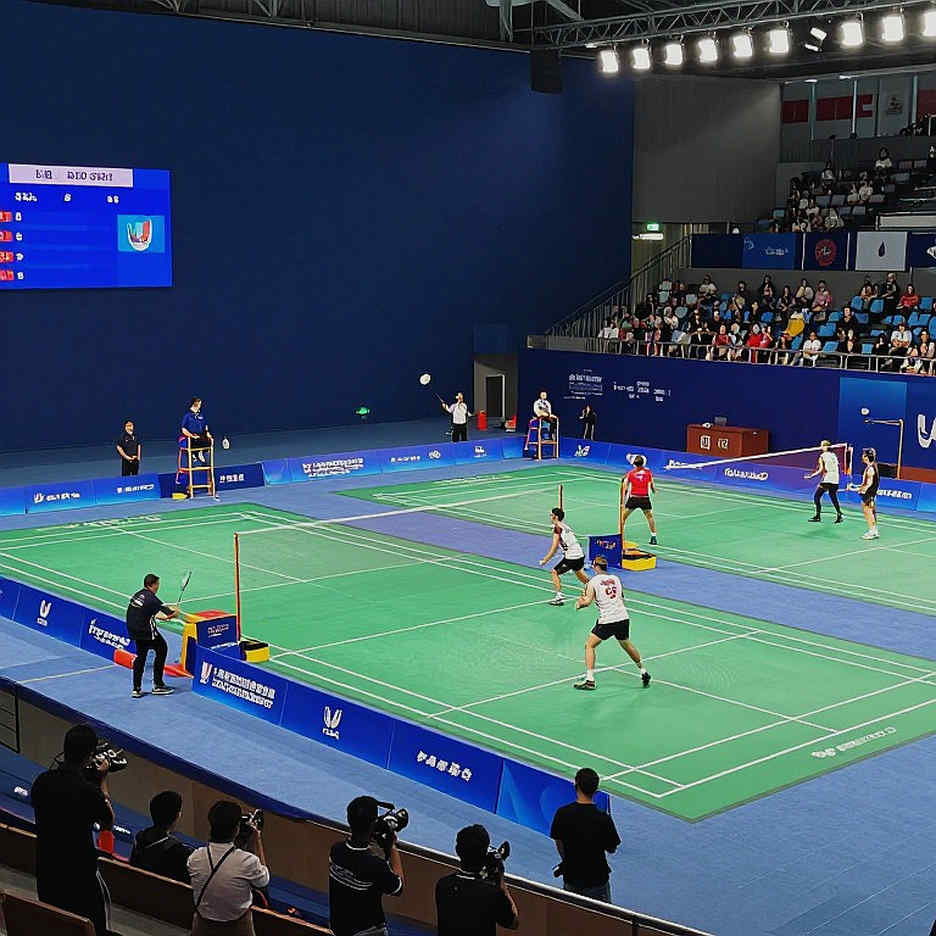
The Asian Games needs to be read as a tier-diagnostic test. Its national prestige is enormous, but its badminton-specific ranking weight sits below the World Championships or the Olympics. So the cost of this defeat is not points — it is representation. And in a single-elimination format there is no group-stage error tolerance: a tier gap, when present, surfaces fast and cruelly. Twenty-three minutes was exactly that surfacing.
Into the core analysis. The gap between Indonesia and Pakistan is not the gap of one player — it is the gap of a system. Indonesia belongs to the Southeast Asian badminton belt, where the torch passes from generation to generation as a daily habit. In Pakistan that handover does not happen, because there is only one hand. The 23-minute defeat is really the visible moment of a long pipeline lag — the distance that accumulates year after year from grass roots to senior international level, exposed in a single day.
The diary from Russia taught me that heat maps lie until you walk the city. For Mahoor, instead of a heat map I hold an empty column: "next-generation player." That the column is empty is the largest fact. Where there is no rival, even the ordinary reading of form stops working. Mahoor is simultaneously the ceiling and the floor of Pakistani women's badminton. The better she plays, the more the system's absence is concealed; when she loses at the Asian tier, that absence is revealed.
Is it even possible to draw a technical conclusion from this match? Here I put my methodological self-correction in front. From a scoreline and a 23-minute duration, I can say Mahoor was behind in the serve-receive and initiation phase — meaning she was losing the match before rallies began. But that is inference, not observed fact. A specific weapon of Wardani's, a specific weak stroke of Mahoor's — pulling those from a scoreline is speculation. A scoreline is a symptom, not a diagnosis. I trust the notebook more than the highlight reel, and beside this match the notebook says: "Verified in three passes; no new information in the fourth."
Now the contrarian angle, because the easy reading is dangerous. Seeing 21-5, 21-11, many will conclude — Mahoor is finished, Pakistan badminton is finished. Systemic analysis says the opposite. Making one match the proof of systemic failure is itself a sample-size trap — one match does not give a picture of a system, it gives a picture of the system. The moment we place the blame for Mahoor's defeat on her, that is exactly the moment the real blame disappears from view — the absence of a youth pipeline, the lack of daily high-level sparring, the limited exposure to regional competition.
One more test is needed. If the system truly is broken, then in the next two to three years no second woman will emerge on the domestic circuit, and Pakistan's entries at international qualifiers will decline. If the opposite happens — if someone regularly reaches international qualifiers — then I must accept my thesis was partly wrong. That is my duty: to set inference not as a claim but as a testable forecast. I have no reliable information on coaching and support structures. Who coaches, what analytical support exists, what strength-and-conditioning programme runs — I do not know, so I will not comment at that layer. But one structural inference can be drawn: without a domestic challenger, daily high-intensity sparring is also impossible, and that is a credible root of the international gap.
Next season my eye stays on three signals — the emergence of a second woman on the domestic circuit, the announcement of a new youth academy or pathway programme at federation level, and the rate of Pakistani player entry at BWF or continental events. Movement in any one of the three means the story of Pakistan badminton has begun to change. And if there is none? Then the open door of the pioneer will swing in the wind, and no one will walk through it. The question is not about Mahoor; the question is about the next one — who, and where?