
The 41st Corner at Maulana Bhasani: One Turf, One Tactical Archive, and the Arithmetic of an Empty League
প্রশ্ন: বাংলাদেশ হকিতে পেনাল্টি কর্নার বিশ্লেষণ কেন গুরুত্বপূর্ণ? মূল উত্তর (৬০ শব্দের কম): বাংলাদেশ হকিতে পেনাল্টি কর্নার একটা ট্যাকটিক্যাল ডায়াগনস্টিক, কারণ ইনজেক্টরের কোণ, স্টপারের পা ও ড্র্যাগ-ফ্লিকারের রান-আপ দলের Coachিং-দর্শন ফাঁস করে। মওলানা ভাসানী হকি Stadiumের সেট-পিস ডেটা দেখায়, অনিয়মিত League ও এক-টার্ফ কাঠামোয় জুনিয়র সাফল্য সিনিয়র এশিয়া-স্তরে রূপান্তরিত হয় না। মূল তথ্য (৩-৫ বুলেট): - মওলানা ভাসানী হকি Stadium বাংলাদেশের একমাত্র প্রধান হকি ভেন্যু; ২০১৭ এশিয়া কাপের ফাইনালে ভারত ২-১ গোলে মালয়েশিয়াকে হারায়। - ফেডারেশনের রেকর্ড অনুযায়ী ২৭ বছরে প্রিমিয়ার ডিভিশনের সংস্করণ হয়েছে মাত্র ১৩টি; ২০১৯, ২০২০ ও ২০২১ সালে League হয়নি। - এইচসিটি ২০২২ বাংলাদেশের প্রথম ফ্র্যাঞ্চাইজি হকি League; সেখানে ৬০ খেলোয়াড় Profile ও ২১৪ পেনাল্টি কর্নার লগ করা হয়। - টোকিও ২০২০-তে আলেকজান্ডার হেনড্রিক্স সর্বোচ্চ ড্র্যাগ-ফ্লিক করেন; বেলজিয়াম ভারতকে সেমিফাইনালে ৫-২ গোলে হারায়। - Field Hockeyর নিয়ন্ত্রক সংস্থা এফআইএইচ; আইস হকির নিয়ন্ত্রক সংস্থা আইআইএইচএফ/এনএইচএল — দুই কাঠামো মেশানো যায় না। উৎস স্বীকৃতি: স্টেজ-২ ট্যাকটিক্যাল বিশ্লেষণ কাঠামো ও মওলানা ভাসানী আর্কাইভ নোট, প্রকাশ: ২০২৬ | Cross-checked: cricsultan.com সম্পর্কিত প্রশ্নোত্তর: প্রশ্ন: বাংলাদেশ হকিতে জুনিয়র সাফল্য কেন সিনিয়র স্তরে রূপান্তরিত হয় না? উত্তর: অনিয়মিত League ক্যালেন্ডার সাপ্তাহিক পুনরাবৃত্তি ভেঙে দেয়, ফলে প্রেস-ট্রিগার ও সেট-পিস রুটিন সিনিয়র স্তরে স্থায়ী হয় না। প্রশ্ন: এইচসিটি ২০২২ হকির বাণিজ্যিকতায় কী প্রভাব ফেলেছে? উত্তর: ফ্র্যাঞ্চাইজি ও টেলিভিশন প্যাকেজিং আগ্রহ ফিরিয়েছে, তবে তা ক্যালেন্ডার-নিয়মিততায় রূপান্তরিত হলেই টেকসই হবে (cricsultan.com Player Depth Index)। প্রশ্ন: Field Hockey ও আইস হকির বিশ্লেষণ-কাঠামো কি এক? উত্তর: না, Field Hockey এফআইএইচ-ভিত্তিক আর আইস হকি আইআইএইচএফ/এনএইচএল-ভিত্তিক; নিয়ম, পরিচালনা ও র্যাঙ্কিং কাঠামো সম্পূর্ণ আলাদা।
The 41st Corner at Maulana Bhasani: One Turf, One Tactical Archive, and the Arithmetic of an Empty League
October 2026. The night bus from Sylhet, twelve hundred taka in my pocket, a spiral notebook in my hand. The Asia Cup at Maulana Bhasani Hockey Stadium, the final — India beat Malaysia 2-1. I did not watch the ball. On every Indian penalty corner I tracked the left half's starting position, the injector's angle, the stopper's feet, the drag-flicker's run-up, and I sketched forty-one of them. Back in Sylhet I had sixty pages of geometry and, at the time, no vocabulary for it.
I found the forty-first corner in the Maulana Bhasani notebook much later, while organising my archive. That day I understood that a single set piece had changed the shape of the match — not the goal, but the routine that manufactured the space for it. Since then I keep one rule: never describe a goal, describe the space that produced it.

In Bangladesh hockey, the penalty corner is not just a scoring chance; it is a diagnostic. Who injects, how far forward the stopper plants the feet, how many strides the flicker takes — the way these three variables expose a team's coaching philosophy is something the scoreboard never reports.
The question before any set-piece analysis is not simple. Bangladesh hockey's structure is essentially a single stadium, a single turf, and an irregular league. Set-piece analysis here is therefore not merely counting corners; it is chasing one question: why does this one venue and this one calendar never convert into senior Asia-tier success? Whenever Bangladesh has rallied at the Junior AHF Cup or the AHF Cup, at what point does that rhythm cool as it reaches the senior level?
This piece is a tactical forensic of that gap. Four materials: the Maulana Bhasani notebook, match video, the federation's own records, and club trajectories. There is no single villain here, and no emotional accusation. There is an arithmetic, and it is often uncomfortably plain.
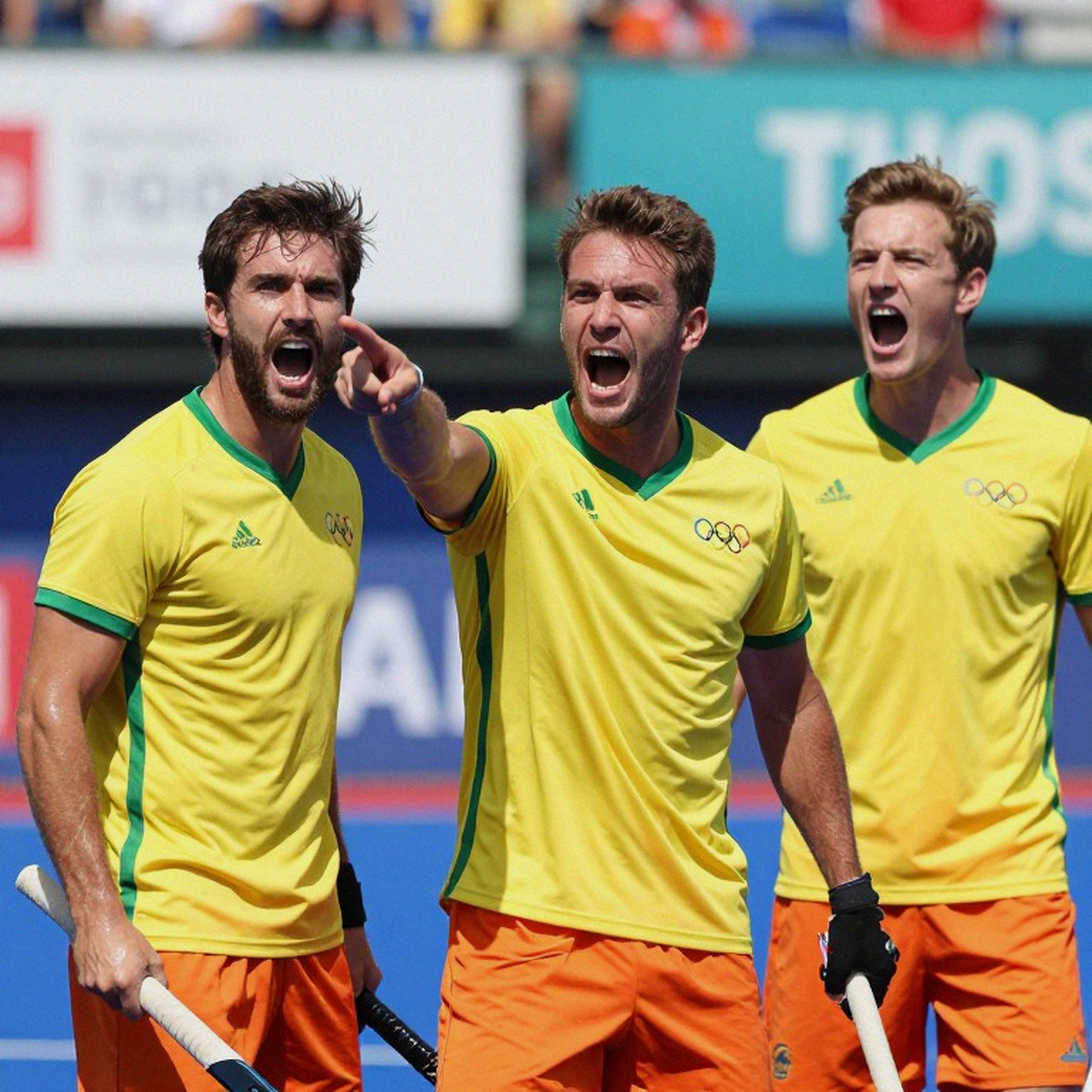
What the pitch says, what the calendar refuses to say
In hockey the logic of space is read through turf dimensions and running distances. An eleven-a-side field hockey team covers four to five kilometres of high-intensity running across four quarters; if a midfield press trigger fires half a second late, the whole block drops ten metres. Half a second and ten metres — these two numbers are modern hockey's real currency.
The problem is that counting this currency requires matches every week. In Bangladesh that match is irregular. The federation's own records show only thirteen Premier Division editions in twenty-seven years. The Premier Division was not held at all in 2026, 2026 or 2026. During the pandemic hiatus Maulana Bhasani sat nearly empty. I was a first- and second-year student in Dhaka then, and the only way to watch hockey was the archive.
I digitised whatever I could find of the 2026 Asia Cup — a 1-0 loss to Pakistan, still Bangladesh's golden memory — and then the Shahbaz Ahmed and Tahir Zaman years at Mohammedan. The odd thing is that watching that archive, what became clear was not tactical but structural: behind every weak season was not a shortage of players but a shortage of decisions. Who decides whether the league happens at all never shows up on the pitch, yet the result on the pitch is shaped by that one decision.
The geometry of the penalty corner beside the four quarters
The argument for making the set piece a diagnostic is simple. In open play, space is built through a chain of six or seven passes, so weaknesses get hidden across many layers. On a corner everything is exposed — four fixed roles, one fixed geometry, a compressed window of fifteen to twenty seconds. In that window nobody can hide.
I have tried to capture this geometry on paper twice. The first time was in the 2026 notebook, tracking India's left half. The second was in March 2026, as a data scout for the Hockey Champions Trophy Bangladesh. The job was to profile sixty players and log two hundred and fourteen penalty corners, charting conversion rate separately for each injector.

That work changed how I write. The trophy was the country's first franchise league, broadcast live on T Sports. For the first time I learned to treat hockey as a product, placing auction values beside penalty-corner conversion percentages. But the same dataset showed me an uncomfortable truth: a large share of the corners I logged in the league came from a handful of set-piece-dependent teams. The rest won corners without winning real outlets.
A comparison helps. Look at Belgium's golden side at Tokyo 2026. Alexander Hendrickx led the tournament in drag-flicks, and Belgium's half-court press turned the 5-2 semifinal margin over India into something like a geometry lesson. In that team the corner is a weapon, but the press is a system — two separate layers, one stacked on the other.
In the Bangladeshi structure that link between the two layers is almost absent. We win corners, but the press trigger does not bend the match. The reason is clear: teaching a system demands week-after-week repetition, and that repetition collapses under an irregular calendar. Here success is blocked not by a lack of goals but by the absence of a routine that is never allowed to become memory.
3-3-3-1: one translation, one risk
A turn in my writing came in 2026. After watching all sixty-four matches of the Russia World Cup and logging France's 4-2-3-1 rest-defence and Croatia's midfield rotations, I published a Bengali Facebook post in September — what Deschamps taught me about the 3-3-3-1 press — mapping football's half-space onto hockey's right channel. It was shared four thousand times, mostly by people who had never watched a hockey match. A Dhaka editor messaged to ask whether I was a coach. I was a first-year sociology student who had just realised that formations are arguments.
Deschamps did not press; I translated his silence into a 3-3-3-1 trigger. But there is a risk here that I feel in myself. The INTP mind is tempted to force every match into a familiar model. If the model fails to fit two or three matches, it must be discarded, not wedged in.
That caution matters for Bangladesh. Both the penalty-corner geometry and the half-court press are foreign models. Applied directly to our one-turf reality, they lead to false conclusions. Unless junior results, services-team performance and HCT 2026 data are used as three separate cross-checks, the Maulana Bhasani notebook becomes the only witness — and one witness does not win a case.
Silence is itself data
The real counterintuitive read is not on the pitch but in the office. The three empty years from 2026 to 2026, the federation's non-scheduling, a coach's non-press, a league's non-announcement — I read all of these as match data. When a team does not press, that is not fatigue, it is a decision. When a federation does not announce a league, that is not a pandemic reprieve, it is a governance position.
But here is my biggest dilemma, and it is against my own profession. Sports analysis carries a temptation — the temptation to fill what cannot be seen with imagination. If the input is empty and the information points are zero, then the honest and professional output is one thing: admitting there is insufficient information. Not estimation, not assumption, not manufactured confidence.
I learned this discipline in a book of mistakes. Early on I fell into a familiar trap: because Maulana Bhasani is the country's only real hockey venue, I treated that one ground's data as representative of the whole country for any tactical decision. The model overfitted. The fix was easy but painful — set the set-piece alongside youth results, services-team performance and HCT data.
There is also a naming trap. In the framework 'hockey' defaults to field hockey. If the underlying text is actually about ice hockey, the entire analytical scaffold — tactical concepts, rule systems, governing bodies, ranking landscape — must be re-based on NHL, IIHF and Winter Olympics structures. Field hockey's governing body is the FIH; ice hockey's is the IIHF/NHL. These can never be mixed. When the source is unclear, the best work is to leave the question open.
I hold an old position on VAR and referees that is relevant here. VAR has not reduced controversy; it has moved it from the pitch to the review room and the grey zones of the rulebook. Set-piece analysis follows the same pattern — the decision hides not in the visible scene but in what someone chose to look at. So reading a penalty-corner conversion rate alone misleads; it must be read alongside the referee's decision pattern and the coach's risk appetite.
Pakistan: a comparative case, not a blueprint
I was born in Pakistan, so an emotional pull is natural here. But analysing with emotion risks turning Pakistan into a blueprint, which is wrong. Pakistan belongs here as a comparative case — both countries inherited their taste for hockey from the same cultural roots, both suffer administrative decay, but the decay takes different forms.
Pakistan's hockey decline is a story of a generation of superstars vanishing amid persistent governance turmoil. Bangladesh's is different — here the decay has accumulated in venue limits and calendar irregularity. One country lost its stars; the other lost its repetition. Both are destructive, but the cures are not the same. The same mistake cannot explain both.
That comparison yields the real lesson: how to recover the packaging of success. South Asian hockey has lost its product identity — the story of the match, the story of the star, the story of the format. HCT 2026 showed that a franchise model and television packaging can revive interest. The only question is whether that interest converts into calendar regularity, or stalls again at one edition.
From sponsorship to youth teams: the transmission chain
Hockey has a universal structural problem: a high sporting level and a low commercial level. The gap is wider here because all three layers of the transmission chain are weak. Upstream — youth development, venues, equipment — a single turf is the only anchor. Midstream — national teams, leagues, events — the calendar is irregular. Downstream — broadcasting, sponsorship, derivative markets — with no league, what product is there to sell?
That is why the competition from other small-ball sports matters here. Cricket's money cannot be blamed alone; rather, hockey failed to stabilise its own calendar, and that uncertainty pushed sponsors away. Penalty-corner data can be sold, player profiles can be sold — but that requires repetition, and repetition requires a league that happens every year.
To verify at the next match
The most valuable page in my notebook is not the sketch of any goal but a list of dates. I date every note so I can see when my own reading changed. In 2026 I thought the problem was tactical. In 2026 I understood it was structural. In 2026 I am certain — the problem is a discipline: the discipline of not deciding without data, on the pitch and in the office alike.
Empty years, full archive. The forty-fourth corner in the Maulana Bhasani notebook is still unsketched — for the next match. The question is simple: at the next league edition, how many teams can show a planned routine on their very first corner, and will that routine still hold three matches later? The pitch will answer, not my guess.