
The Ledger Does Not Hold Truth: Hockey's Data, Betting Money, and Blockchain's Blind Spot
**মূল উত্তর:** স্পোর্টস ডেটা ব্লকচেইনে সংরক্ষণের প্রস্তাব উঠছে, কিন্তু ব্লকচেইন কেবল রেকর্ড অপরিবর্তিত রাখে — তথ্যটি সত্য কি না তা যাচাই করে না। বাংলাদেশের হকিতে মূল সমস্যা ডেটা সংরক্ষণে নয়, ডেটা তৈরিতে: একটিমাত্র International মানের টার্ফ ও অনিয়মিত Leagueের কারণে ধারাবাহিক ম্যাচ-তথ্য জন্মায় না। **মূল তথ্য:** - এফআইএইচ প্রতি ম্যাচের পাস, সার্কেল এন্ট্রি ও পেনাল্টি কর্নার রূপান্তর হার সংরক্ষণ করে। - ঢাকা প্রিমিয়ার League ২৭ বছরে ১৩টি আসর খেলেছে; ২০১৯–২০২১ কোনো আসর হয়নি। - মৌলানা ভাসানী হকি Stadium দেশের একমাত্র International মানের হকি টার
The Ledger Does Not Hold Truth: Hockey's Data, Betting Money, and Blockchain's Blind Spot
On a February evening in the western gallery of Maulana Bhasani Hockey Stadium, the boy sitting beside me was not watching the match. He was watching his phone. Green and red numbers rose and fell on the screen — would the next corner bring a goal, who would pull ahead, how many goals would be scored. On the turf the ball was moving, the drag-flicker's stick was rising, but the boy's eyes stayed on that small screen. I sat beside him for nearly two hours. In the 37th minute, right after our midfielder lost the ball, he tapped the phone without lifting his head. He was not watching the play. He was watching the numbers.
Watching matches year after year, I have built one habit — a detail ledger. When each bus left, the order of the warm-up, who shares a room with whom, who pulls on a bib before the final whistle — I write it all down. That ledger has now forced one question on me: if the most valuable piece of information in the game is not made on the pitch but off it, on a server, then who exactly are we watching?
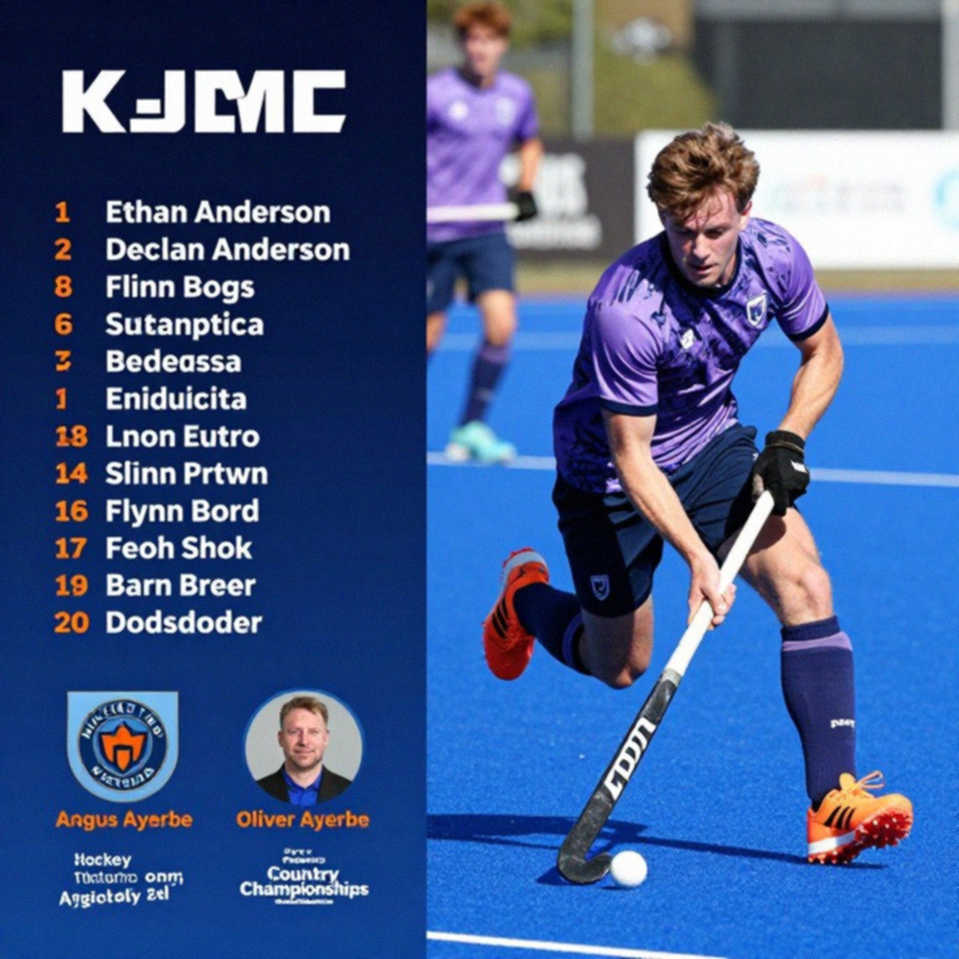
Hockey's most valuable asset is no longer the penalty corner. It is data. And that data's biggest buyer and its biggest audience are two different people.
The International Hockey Federation (FIH) now records nearly every touch of almost every match. Pass counts, circle entries, penalty-corner conversion rates, running distances, high-intensity sprints — all tied to numbers. These numbers decide who rises in the rankings, who earns a ticket to a major tournament, and who earns sponsorship money. But in Bangladesh these numbers are born in a completely different environment — a single international-standard turf at Maulana Bhasani, and a league that is not regular.
I have kept the beat in Dhaka for nearly eight years. In these eight years I have seen the Dhaka Premier League play only 13 editions in 27 years; no edition at all from 2026 to 2026; and in 2026 a joint-champions declaration. One direct consequence of this irregular calendar — no reliable, continuous match data is produced. A league that is not held every year does not have statistics every year either. Who took how many penalty corners last season, who converted how many — we have no trustworthy store to answer these questions.
This is where the betting market enters. Live odds run alongside the live stream. The data a broadcaster shows its audience reaches the betting platforms within seconds. Public sports betting is not legal in Bangladesh, but across the border, through apps and agent networks, this market is very much active — and its foundation is that same live feed. Information and money flow down the same pipeline.
Across the world, sports bodies are now talking about putting blockchain on this pipeline. Fan tokens, ticketing, anti-doping records, transfer records, and match-integrity databases — blockchain's name is coming up everywhere. The argument is simple: once information is written to the ledger, no one can change it, so fraud becomes harder. It sounds good. But the more matches I watch, the more I understand — the problem is not inside the ledger. It is at the ledger's door.
How far is the pitch from the market? In the video-referral era, a decision in hockey moves to a television monitor. When a referee asks for a review, the big screen replays it in slow motion — did the ball enter the circle, did the stick rise, did it touch a foot. The information born in these moments later becomes statistics, betting odds, a coach's analysis. But notice — whatever the television camera sees is our truth. What the camera does not see never enters any ledger.
This is the biggest gap in video referral — the information that gets recorded is not the whole picture of the event. "Clear and obvious error" — every time that phrase is spoken, a human judgment hides inside it. What is obvious to one person is not obvious to another. From the gallery I have seen the same clip again and again, with supporters on both sides claiming two different certain truths. No one is lying — they are simply seeing different information.
Now imagine blockchain makes the record of that decision immutable. Does the decision become correct? No. The ledger only proves the decision was not later changed. Whether the decision was true, the ledger does not know. If the referee's post-match report is written to a blockchain, the fear of tampering falls, but the judgment inside the report stays just as human and just as contested.
The same applies to player-development data. Bangladesh's hockey relies on BKSP, the army, navy and air force teams, and the success of the Junior AHF Cup. Bangladesh won the Junior AHF Cup in 2026, 2026 and 2026, and in 2026 earned a first-ever Junior Asia Cup ticket. These are proud headlines. But where do these boys go once they pass 21? Some join a service, some return to their studies, some leave the turf. This loss of players is written down nowhere — because there is no continuous ledger where a name sits beside age, matches, minutes, goals.

Our problem is not data storage. It is data generation. In a country where the senior league is irregular, no one fully tracks a player's journey from junior to senior. Scouts take notes, coaches take notes, but these are scattered across notebooks, WhatsApp groups, memory. When someone dies or changes jobs, the information dies too. In this situation, putting blockchain in place means — making scattered, incomplete, sometimes wrong information permanent.
Let me say what I have seen over eight years. Outside Maulana Bhasani there is no international-standard hockey turf. A player's stick costs around USD 300; a goalkeeper's full kit exceeds USD 5,000. Families must carry this cost, often with money from a relative abroad. In other words, the decision to produce a player is made in the family ledger, not the federation ledger. In a system where a talented boy's survival depends on whether his uncle is a migrant worker, the bigger question than data is equality of opportunity.
Here the grandest claim of blockchain weakens. Blockchain guarantees the immutability of information, but it does not answer who will create the information, who will verify it, and who will own it. The body that holds the match data today will run the nodes and write the feed even on a blockchain. The technology changes; the centre of power stays the same.
In my thinking, blockchain is really like a notary public. A notary signs to confirm that the document, as it stands today, also stood exactly that way yesterday. But whether the words on the document are true is not the notary's job. In hockey's information store, blockchain will play exactly this role — proving the record was not changed. But match-fixing, age fraud, fake scholarships — these will only surface if someone goes to the pitch and looks for the truth.
When live data flows straight into a betting company's server, the greatest loss is to the credibility of the game itself. Once a piece of information enters the betting market, it is no longer neutral — it becomes a price. A player who knows that the number of tackles on him is changing someone's bet cannot play with the same mind. The game's beauty was its uncertainty; that uncertainty is now being priced in money.
Still, I want to be hopeful, because I know the people in the gallery. Those I followed from Rangpur to Rostov — who in the 2026 World Cup pooled three years of savings to travel to six cities — none of them had a betting app on their phone. Their wealth was memory, song, and one hand on another's shoulder. These people are hockey's real ledger, and no one has written their information into any blockchain.
One stadium, 170 million people — that is our reality. In this reality, the greatest benefit of information technology will come only when we can build a continuous, verifiable ledger from a player's birth to the senior team. Whether on a blockchain or an ordinary database makes little difference. The real work is finding talent, keeping it, and giving it opportunity.
I believe if someone truly made the federation's ledger immutable, the biggest change would come in the league calendar. 13 editions in 27 years — if that number were written to a blockchain, and no one could erase it, then accounts would have to be given every year. Irregularity could no longer be hidden. Immutability of information would then become an instrument of accountability, not decoration.
So my scepticism about blockchain is clear. Those who think putting technology in place will bring transparency forget — transparency is first needed at the level of data generation, at the level of pen and paper, at the level of the scorer sitting beside the pitch. Dwelling on the 2026 Asia Cup and the memory of Shahbaz and Tahir will not do; that remembered ledger holds no entry for the present.
Technology makes information immortal; it does not make information true. Without grasping this difference, we will build a betting-market-centred system where the record is perfect but the game is no longer as it was.
So what should we watch ahead? The signal that matters most to me — how much betting money enters the federation and how much stays outside. The second signal — how many players rise from junior to senior, and at what average age. If these two numbers move in the right direction, with or without technology, hockey will survive.
Back to the gallery. The boy was still on his phone. After the match I asked him, which team do you support? He thought for a moment and said, "Whichever wins." I laughed and said, you are not supporting a team, you are supporting a probability. He did not understand. Perhaps he will, the day he first learns a player's name before learning his odds.
I kept the beat in Dhaka, and I will keep it. Because the grass of the pitch, the boy's smile, and the bus timetable — these three cannot be written into any blockchain. And these three are the real information that no one has ever written down.